
Published: 2 August 2023
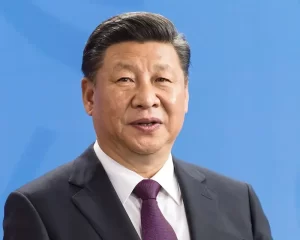 What’s behind Xi Jinping’s seemingly permanent Buddha smile? A diplomat’s answer might run along the lines of the secret strategic calculations that tell Xi the geopolitical balance of power is tilting his way. A sense of impending victory, hubris even. A psychologist’s answer might be different: it points not to victory, but to a force fundamental to China’s collective political psychology: shame.
Shame is a pillar of any civilization and solidified in its governmental institutions and in terms of law. Look only at the ancient Greek myths of origin. Zeus recognized that humans tend to quarrel endlessly, seek out war and risk self-annihilation, and so he gave his messenger Hermes two gifts to bestow upon people. One was aidos: shame, respect for others, modesty, and a sense of finitude. The other: dikē, or a sense of justice, something that would create bonds of friendship, union, and discourse in politics. Only with these two gifts, this essential pair, did humanity have the tools to develop civilization.[1]
Shame is not the same as guilt. Guilt focuses on a conflict between a wish and a rule and is related to punishment as is only too familiar in the Catholic Church, for example. Shame is the result, rather, of self-reflection: it is the awareness of one’s own shortcomings and lacks. Guilt is about interaction with the other; shame’s pre-condition is solitude. Although shame and guilt are both central elements of the collective psychology of any civilization, Western commentators tend to conflate the two, staying blind to the distinct quality of shame in understanding the psychology behind Chinese culture and politics.
Since ancient times, Chinese culture links shame to solitude and indeed legal and political power. During imperial times, Chinese officials would have studied for at least a decade before a local governmental position was offered.[2] Candidates would study from as young as 8 until the age of 30 to pass three exams and receive a respected position as an official (guan huan) in local government before aspiring to jobs in central government. Studies includes orthodox philosophy, language (including calligraphy) and mathematics, and at all times with the outmost respect for teachers. Shame is the gift that the privilege of solitude bestows upon those worthy of serving authority.
Shame is central to Confucian thought. As a child there is a need to be critical of oneself (not the parent). Confucius said a child should not have their parents be concerned about them.[3] Elders are not to be confronted with their children’s problems and likewise seniors are not to be confronted with concerns of their juniors. In a shame-orientated civilization, the absence of a direct relationship with the elder, or somebody in a hierarchical position, one can only question oneself whereas a guilt-orientated Western society, that ishas a more open relationship with family and God, with authority. To simplify, in Chinese culture the family’s grace is central, in Western culture it is the individual.
Especially when one cannot criticize the parent, teacher, or authority, as one may well do in any given Western cultural context, observing the other – as well as observing one’s own responses to the other’s behaviour – becomes key to dealing with the other meaningfully and, indeed, strategically. Confucius gives us a clue as to what this may mean in Western dealings with China:
The Master said: “Observe [shi] what a person does. Look into [guan] what he has done [you]. Consider [cha] where he feels at home. How then can he hide his character”.[4]
In his interaction at the recent G20 meeting with Canadian president Trudeau, Xi rebuked Trudeau for allegedly leaking information to the media.[5] In this rare moment of overt irritation, Trudeau is ‘chastened’. Unable to address Xi’s criticism, he walked off in opposite direction appearing to be wrong-footed.
What do we learn from these observations, from ‘what the person does?’ Xi is dependent on his people, and by implication to the world around him. From the encounter with Trudeau we learn that Xi demands respect for his values and that he may use humiliation to force the other. The encounter also shows that Xi will openly attack an outlier, Canada, which is not the USA and not part of Europe, in defence of China’s norms and values (think of Taiwan that can be seen as an outlier). Xi also shows that he is willing to show more of himself to the world; he is a force to be reckoned with.
China’s place in the world has changed considerably over the last twenty years. We observe China’s every move, not just with an economic interest but also to understand its strategic aims. To do so, to understand China, we need to appreciate Xi’s ostensible elusiveness against a background of the national humiliation suffered during the opium war of 1840. The recovery from colonial subordination was first addressed by Sun Yat Sen, who described the suppression and the economic unfairness of the ‘Unequal Treaties’, and then by Chiang Kai-Shek in 1947[6]. The century of humiliation was addressed by Mao, and the same theme can now also be found in speeches made by Xi,[7] in which he does not just hint at the unification of China.. This sense of nationalism against a background of humiliation was also observable in previous leaders’ policies. Although different in his international approach and focused on more liberal politics, Deng Xiaoping would not let Thatcher have a further go at keeping Hong Kong under English sovereignty. The current stakes in international relations with China are high, in terms of trade but more importantly, when considering geopolitical stability. As we recognize the driving force of past humiliations in China’s present geopolitics, we need to appreciate the enduring sense of shame that accompanies it.
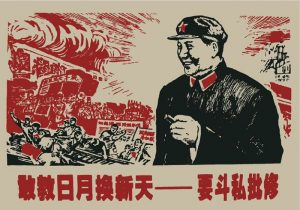 The relationship between shame and solitude is ambiguous in the sense that it can be used restoratively as well as destructively.The Red Guards weaponized shame during the Cultural Revolution.[8] The older generation, especially intellectuals, were attacked and imprisoned, sent to labour camps, or killed. It may feel like a long time since Mao’s leadership, but the macabre marriage of shame and control in those times resonate in the high-tech surveillance seen in China. The key technology used is not AI nor biometrics, but the psychology of shame.
Xi’s father, Deng Xiaoping himself, and many others were purged in Maoist times, and some of those purged by Xi, were humiliated, banned, and after a period of forced exile and self-reflection, exonerated. Humiliation was a punishment, but it was also the gift of restorative self-reflection through exile. This is key, I think, to the way shame works as a pillar of civilization: it does not just enforce discipline, it also offers redemption. The Red Guards, however, are an example of Mao’s destructive use of humiliation to keep control over his people.
In the history of China’s culture shame is a function of Chinese society, family, and politics. Shame is key to understanding what drives China as a great power, is key to understanding what’s going on in the back of Xi’s mind. China’s determination to move forward and become a player at the world’s centre of geopolitics has never been stronger. Colonialism affected the course of Chinese civilization in the 19th century, a humiliating experience the Chinese are still recovering from, and, some say, will not end until Taiwan is part of China again. But whether past or future, China can no longer live in solitude because of the power base it has in the world. Confucius spoke about shame: To possess feelings of shame is akin to courage. There is strength to self-reflection for the individual and the collective; reflection on shame makes shame a teacher.[9] A long history dating back thousands of years is centred on a privilege of self-examination. Turn the suffered humiliation into shame as a function of society and China becomes A nation with a feeling of shame [which] is like a crouching lion ready to leap forward.[10]
What can the understanding of shame teach us about ways to meaningfully engage China, in particular when it comes to expressing our concerns about, say, Taiwan’s fate, or Tibet’s, or human rights? Perhaps more observation and reflection would be a method that could assist in developing an understanding of the Chinese psyche. As Confucius said: “The mistakes people make reflect the type [dang] of person each one is. Observe their mistakes, and you will know their character [ren].[11] Observation, as a skill, is important, while maintaining relationships with China. That is different from having a continuous direct dialogue. A more reserved, self-reflective and observational openness may provide a space where exchange can take place.
[1] Hinton, L. and Willemsen, H. (2018, Eds). Temporality and Shame. London: Routledge.
[2] https://www.chinasage.info/officials.htm, retrieved 15.02.23.
[3] Meng Wubo asked about filial responsibility. The Master said, “Give your parents no cause for worry other than your illness. Book 2.6, p. 15. Confucius – The Analects. Translated with an introduction and commentary by Ann Ping Chin. New York: Pinguin, 2014, p. 124.
[4] Confucius – The Analects. Translated with an introduction and commentary by Ann Ping Chin. New York: Penguin, 2014, Book 2.10, p. 16.
[5] https://www.theguardian.com/world/2022/nov/16/xi-trudeau-canada-china-g20, retrieved 14.02.23.
[6] Van de Putten, F.P. (2020).l De Wederopstanding van China. Amsterdam: Prometheus.
[7] The century of humiliation is from 1839, the first opium war, until 1949, the establishment of the People’s Republic of China.
[8] A militant youth movement in China (1966–76) which carried out attacks on intellectuals and other disfavoured groups as part of Mao Zedong’s Cultural Revolution.
[9] Hinton, L. and Willemsen, H. (2018, Eds). Temporality and Shame. London: Routledge.
[10] BBC series The Story of China, episode 5
[11] Book 4.7, p. 47.
[2] https://www.chinasage.info/officials.htm, retrieved 15.02.23.
[3] Meng Wubo asked about filial responsibility. The Master said, “Give your parents no cause for worry other than your illness. Book 2.6, p. 15. Confucius – The Analects. Translated with an introduction and commentary by Ann Ping Chin. New York: Pinguin, 2014, p. 124.
[4] Confucius – The Analects. Translated with an introduction and commentary by Ann Ping Chin. New York: Penguin, 2014, Book 2.10, p. 16.
[5] https://www.theguardian.com/world/2022/nov/16/xi-trudeau-canada-china-g20, retrieved 14.02.23.
[6] Van de Putten, F.P. (2020).l De Wederopstanding van China. Amsterdam: Prometheus.
[7] The century of humiliation is from 1839, the first opium war, until 1949, the establishment of the People’s Republic of China.
[8] A militant youth movement in China (1966–76) which carried out attacks on intellectuals and other disfavoured groups as part of Mao Zedong’s Cultural Revolution.
[9] Hinton, L. and Willemsen, H. (2018, Eds). Temporality and Shame. London: Routledge.
[10] BBC series The Story of China, episode 5
[11] Book 4.7, p. 47.