Published: 26 March 2026
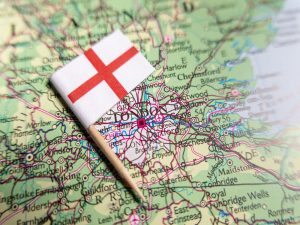
It only takes a drive through suburban and urban parts of the country to notice the many St George’s and Union Jack flags displayed on lampposts, bridges and in people’s gardens. Casual observers might be forgiven for being somewhat confused because until fairly recently, the wide display of flags seemed to be limited to periods of major national significance – international sporting events, the death of a senior member of the Royal Family or national commemorations such as Remembrance Day.
Although today’s displays may be interpreted as expressions of patriotism, they can also be read as signals of social or political discontent. It appears that some of these flags are placed anonymously, which may indicate a reluctance in publicly ‘nailing your colours to the mast’.
What is the message of this pervasively posted national symbol and why might it be seen not only as patriotism, but also as a potentially concerning social development?
Some argue that flags are patriotic, fostering a sense of belonging, shared values and responsibility for the wellbeing of the nation as a whole. In times of prosperity, patriotism may strengthen through a sense of collective achievement. Equally, in times of uncertainty – such as concerns about employment, immigration, living standards or even climate – national symbols may provide reassurance and identity. In this sense, patriotism can serve as a unifying psychological force.
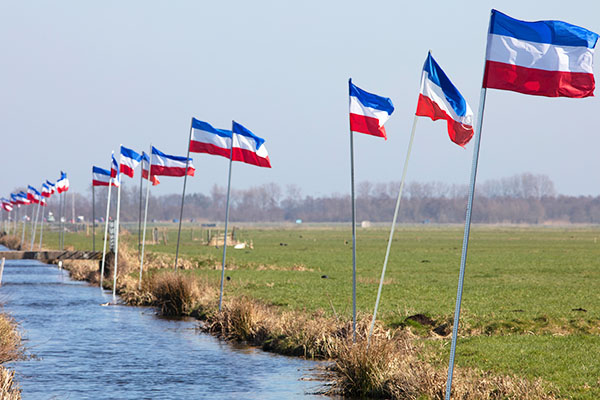 Many years ago, a flag on a ship could be hung upside down as a sign of distress and for other ships to respond; Dutch farmers hung the Dutch flag upside down to express their discontent and upset about new laws affecting farming. In one recent case in Weoley, a suburb of Birmingham, a group calling themselves the ‘Weoley Warriors’ - claimed responsibility for hanging flags, saying they were a "group of proud English men with a common goal to show Birmingham and the rest of the country of how proud we are of our history, freedoms and achievements". But why now? What underlying social or psychological conditions give rise to such expressions?
In recent decades, the St George’s flag has – at times – been associated with nationalist or exclusionary movements, although it also retains broader cultural and historical meanings. In recent anti-immigration protests the flag has been used as a symbol of unity and discontent. At this point, a distinction becomes important: when such protests take place – particularly outside accommodation for migrants - patriotism may begin to shift into nationalism. Patriotism tends to emphasise shared belonging, whereas nationalism can become more exclusionary, defining who does and doesn’t belong. These movements may also involve strong criticism of political leadership, institutions and policies – particularly around immigration and borders.
In his essay ‘Totem and Taboo’ Freud speculates that in early human society, a band of sons killed a dominant father, later feeling guilt and creating totemic religion and moral law, or a new order. Historically, periods of social upheaval have sometimes involved the removal of leaders and emergence of new social orders. For example, King Louis XVI was executed during the French Revolution, prompting the emergence of the Republic. A new totem (symbolised by a new leader, Robespierre) emerged with new taboos (law and institutions) in place.
The question, then, is whether the flag on the lamppost represents a relatively benign totem – one that brings people together in the face of uncertainty - or whether it may also reflect deeper social tensions. It is, perhaps, worth reflecting on a recent attempt to create a new totem on January 6th, 2021 when supporters of Donald Trump stormed the U.S. Capitol in an attempt to disrupt the certification of the 2020 Presidential Election. Such events illustrate how powerful group identity and shared symbols can become, particularly when combined with perceived threat or grievance.